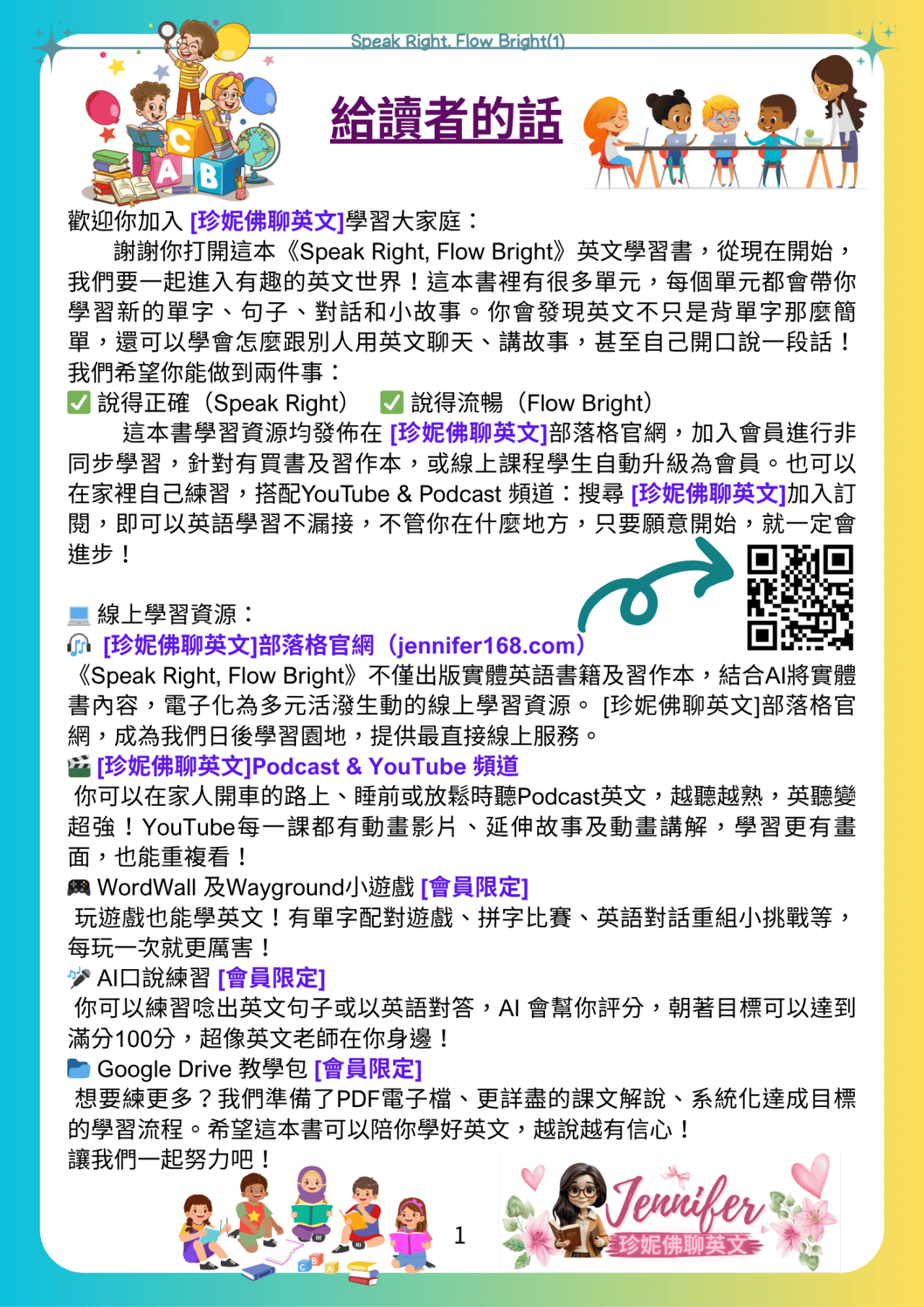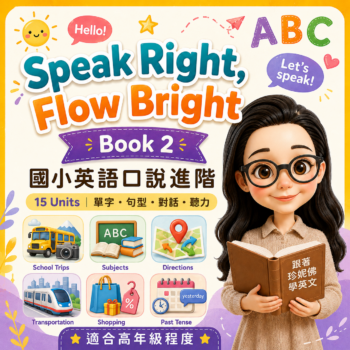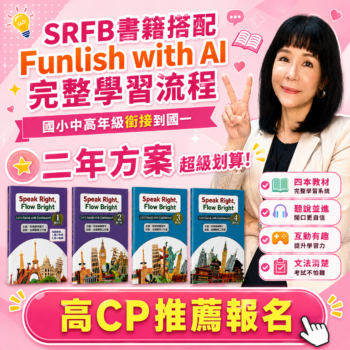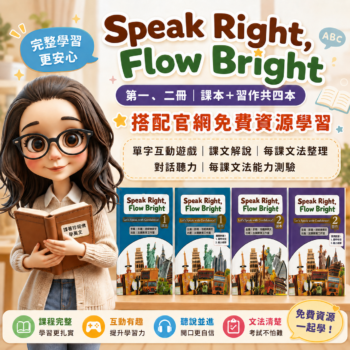
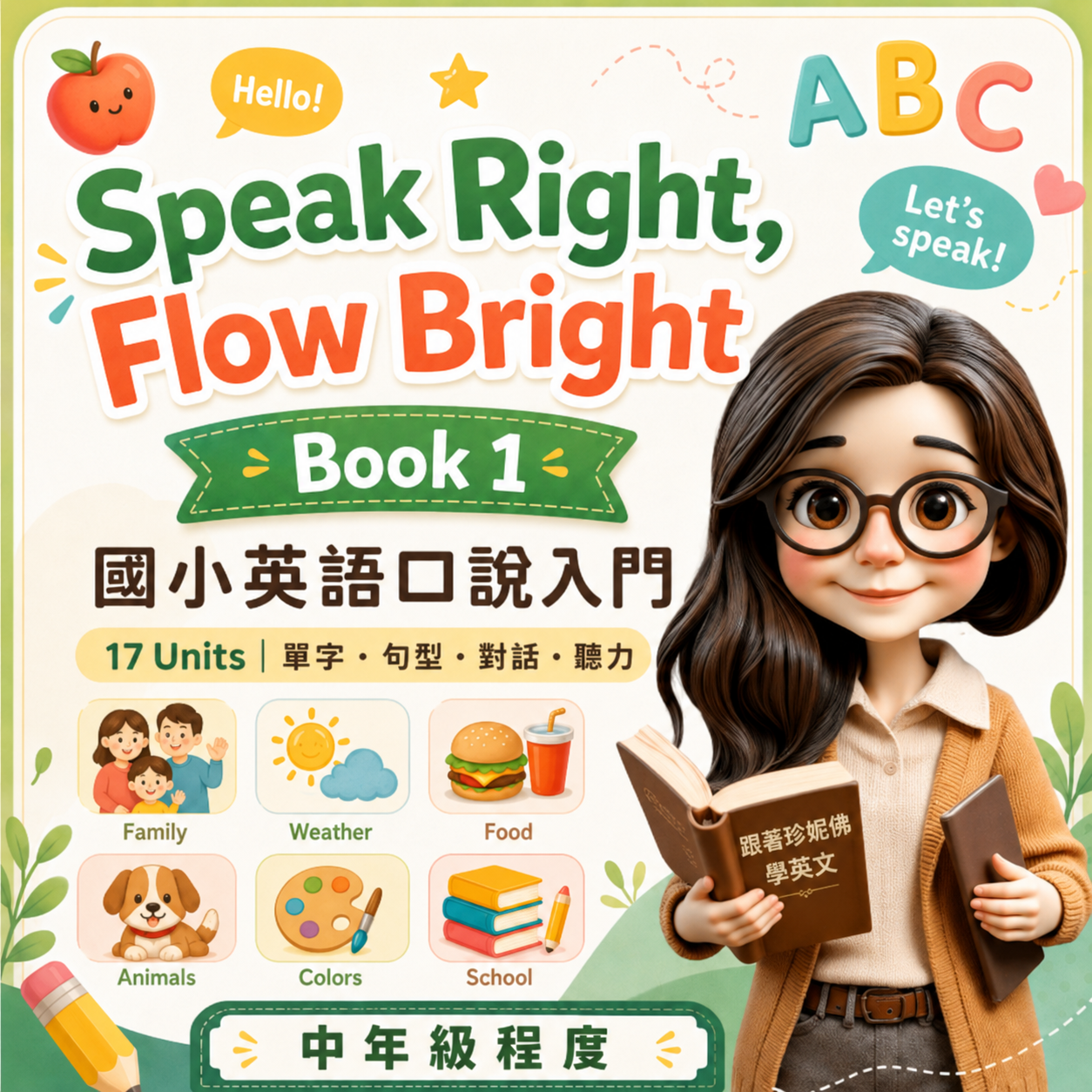
《Speak Right, Flow Bright (1)》「全書單元字彙、句型與商品介紹總覽」。
📘《Speak Right, Flow Bright (1)》全書字彙與句型完整整理
Unit 1: Self Intro & Name Asking (自我介紹與詢問姓名)
- 基本單字量:10 個
- What, name, you, your, I, my, he, his, she, her
- 基礎句型:8 組
- What’s your name? / My name is Tim.
- Is your name Mark? / No, my name is Jason.
- Is she Tina? / No, she isn’t. She is Una.
- What’s her/his name? / Her/His name is…
- Is he Tom? / No, he is Sam. / Yes, he is.
- 延伸對話能力(情境引申):
- 國家與自我介紹(I’m from Canada / Taiwan)
- 介紹他人(This is my friend/sister…)
- 社交禮貌用語(Nice to meet you! / Good morning! How are you?)
Unit 2: Q&A about Age (年齡問答與比較)
- 基本單字量:12 個
How old, age, older, younger, youngest, oldest, welcome, zoo, play, game, elephant, lion
- 基礎句型:8 組
- How old are you? / I’m ten years old.
- Are you nine years old? / No, I’m ten years old. / Yes, I am.
- Are you a nine-year-old boy? / No, I’m a ten-year-old boy.
- How old is she/he? / She/He is…
- 延伸對話能力(情境引申):
- 詢問與年齡比較級/最高級應用(What’s your age?, Who is younger/the oldest in your family?)
- 動物園猜年齡互動對話(Guess how old the elephant is!)
Unit 3: Identifying Objects (物品辨識與遠近單複數)
- 基本單字量:20 個
- this, that, it, these, those, they, marker, pencil, ruler, eraser, pen, notebook, pencil case, sharpener, bird, butterfly, rainbow, shooting star, coin, balloon
- 基礎句型:8 組
- What’s this/that? / It’s a marker / bird.
- Is this/that a marker/ruler? / No, it isn’t. / Yes, it is.
- 延伸對話能力(情境引申):
- 遠近與單複數互動對話(What are these/those?, Are these rulers?, They are butterflies / coins.)
Unit 4: Talking About Colors (色彩世界與大自然)
- 基本單字量:20 個
- white, black, gray, red, yellow, blue, green, purple, pink, rose, sunflower, grapes, grass, broccoli, sky, sun, strawberry, leaves, panda, ocean
- 基礎句型:8 組
- What color is it/the apple? / It’s white/red.
- What color are the grapes? / They’re purple.
- Is this apple green? / No, it’s red.
- Are the grapes purple? / Yes, they are. / No, they are black.
- 延伸對話能力(情境引申):
- 結合事物的色彩問答(Is the sunflower yellow?, Is broccoli green?)
- 色彩神祕猜謎遊戲互動對話(What color are leaves in the summer?)
Unit 5: Size Q&A Practice (大小與尺寸形容詞問答)
- 基本單字量:24 個
- small, big, short, long, tall, thin, thick, paper, table, customer, salesperson, medium, large, try on, fitting room, shoes, pants, fit, want, like, take, inside, outside, T-shirt
- 基礎句型:9 組
- Is this dog small? / Yes, it is. It is a small dog.
- Is this pencil long/short? / No, it isn’t. / Yes, it is.
- Is he short? / No, he isn’t. He is tall.
- Is that a big box? / No, it isn’t. It is a small box.
- 延伸對話能力(情境引申):
- 服飾與鞋子尺寸試穿購物對話(Can I try it on?, The fitting room is over there.)
- 詢問購買家具尺寸需求與長短褲選擇
Unit 6: Can You? Action Verbs Practice (動作動詞與能力詢問)
- 基本單字量:21 個
- sing, dance, read, write, jump, hop, run, walk, swim, climb, draw, throw, kick, far, rabbit, cheetah, school, picture, high, fast, turtle
- 基礎句型:8 組
- What can you do? / I can sing / write.
- Can you read? / Yes, I can.
- Can you sing? / No, I can’t, but I can dance.
- Can you hop like a rabbit? / No, I can’t, but I can jump.
- Can you run fast / walk to school? / Yes, I can!
- 延伸對話能力(情境引申):
- 能力表現與特技(I can jump high!, I can kick it.)
- 我是誰?動物奔跑與游泳能力猜謎對話
Unit 7: Getting to Know My Family (家庭成員與外貌稱謂)
- 基本單字量:22 個
- who, father, mother, grandfather, grandmother, elder brother, elder sister, younger brother, younger sister, older man, older woman, aunt, uncle, glasses, hair, coat, doctor, writer, guitar, music, love, reading
- 基礎句型:8 組
- Who’s he/she? / He’s my father. / She’s my mother.
- Who’s the tall/short boy/girl? / He’s my elder/younger brother.
- Who’s the older man/woman? / He’s my grandfather.
- 延伸對話能力(情境引申):
- 結合外貌特徵與職業、興趣描述(Who’s the girl with glasses?, He’s a doctor., He loves music.)
- 家庭成員個性與猜猜我是誰互動遊戲(I love telling stories. Are you our grandfather?)
Unit 8: Asking and Answering About Jobs (職業與工作地點)
- 基本單字量:19 個
- student, teacher, worker, nurse, housewife, driver, engineer, librarian, study, work, company, elementary school, city, library, college, indoors, outdoors, help, people
- 基礎句型:8 組
- What are you? / I’m a student.
- Are you a student? / Yes, I am.
- What is your father/mother? / He’s a worker. / She is a housewife.
- Is your father a teacher? / No, he is a worker.
- 延伸對話能力(情境引申):
- 詢問就讀學校或成年人工作公司(Where do you study / work?)
- 詢問第三方或手足工作地點(I work at the City Library.)
- 室內/室外工作與醫院護理互動猜謎遊戲
Unit 9: Talking About the Weather (天氣描述與國際城市)
- 核心天氣單字:19 個
- weather, sunny, rainy, windy, cloudy, snowy, warm, hot, cool, cold, the USA, Japan, Taiwan, Tokyo, London, Australia, Canada, Paris, have fun
- 延伸對話與情境單字:18 個
- scarf, beach, bring, umbrella, watch, movie, feel, tired, excited, relaxed, sweaty, stay, forget, make, sound, build, snowman, weather report
- 基礎句型:8 組
- How’s the weather today / in the USA? / It’s sunny / windy and cold.
- How’s the weather in Japan/Taiwan? / It’s rainy and cool.
- Is it sunny in Tokyo today? / No, it’s rainy there.
- It’s sunny today. Let’s have fun outside.
- 延伸對話能力(情境引申):
- 天氣與穿搭建議(Don’t forget to bring an umbrella!)
- 天氣與對應活動(Let’s stay inside and watch a movie., Let’s build a snowman!)
- 天氣與心情感受表達(I feel tired and sweaty., Rainy days make me feel relaxed.)
- 小小氣象播報員角色扮演互動對話(Welcome to today’s weather report.)
Unit 10: Talking About the Feelings (情緒與身心狀態表達)
- 核心情緒單字:15 個
- sad, happy, energetic, hungry, full, thirsty, angry, after work, nervous, scared, sleepy, tomorrow, birthday, better, safe
- 延伸對話與情境單字:17 個
- horror, grumpy, strange, beautiful, test, grade, storm, trip, place, kilometer, heard, noise, take a nap, without, stopping, dark, walking alone
- 基礎句型:9 組
- Are you happy/sad? / No, I am sad / happy.
- Is Kelly tired? / No, she is energetic.
- Is your mom angry? / Yes, she is very angry.
- Is your father tired? / Yes, he is. He is tired after work.
- Are you hungry? / No, I’m full.
- 延伸對話能力(情境引申):
- 表達特殊事件產生的情緒(Tomorrow is my birthday!, She has a big test today.)
- 身心狀態與睡眠(I feel sleepy because I stayed up late.)
- 心理情緒的轉變(I feel better now., Now I feel safe.)
- 情緒猜謎互動對話(You just got a bad grade on your test… I’m very sad.)
Unit 11: Talking About the Food (談論食物)
- 基本單字量:15 個
- oranges, watermelons, apples, bananas, hot dogs, sandwiches, hamburgers, this, these, that, those, it, they, juicy, want
- 基礎句型:10 組
- What’s this? / It’s a banana.
- What are these? / They’re watermelons.
- What is that? / It is a sandwich.
- What are those? / They’re oranges.
- I like apples. How about you? / I like watermelons.
- Do you like hot dogs? / Yes, I do.
- Do you like sandwiches? / No, I don’t. I like hamburgers. They are yummy.
- Do you like watermelons? / Yes, I do. I like watermelons. They are juicy.
- Look, what are those? / They are yummy bananas.
- Look! Those are big hamburgers. Do you want to try them? / No, thanks. I’m full.
- 🌟延伸對話能力(情境引申):
- 食物名稱與偏好: 詢問他人喜好並給出評價(yummy / delicious / cheesy) 。
- 描述食物味道與口感: 描述水果的風味(They are a little sour but very juicy) 。
- 飲食與飢飽狀態表達: 婉拒或接受食物(No, thanks. I’m not hungry / I’m full) 。
- 猜食物互動謎語: 透過線索描述猜測水果(例如:round and red $\rightarrow$ tomato / long and yellow $\rightarrow$ banana) 。
Unit 12: Making Food Choices (做食物選擇)
- 基本單字量:15 個
- cake, rice, noodles, pizza, chicken, ham, cheese, drink, juice, tea, water, milk, ready, want, which
- 基礎句型:10 組
- Do you want some tea? / No, we don’t. We want some milk.
- Do you want noodles? / Yes, we do.
- Do you want some juice? / No, I don’t. I want some ice cream.
- Do you want some rice? / No, I don’t. I want some cake.
- I want some water. How about you? / I want some juice.
- I want rice. How about you? / I don’t want rice, but I want noodles.
- I want some tea. How about you? / Me, too.
- Do you want some rice? / Yes, we do. We’re very hungry.
- Which one do you want? / I want this one.
- Which one do you want, Guys? / We want that one.
- 🌟 延伸對話能力(情境引申):
- 二選一食物抉擇: 表達具體的飲食偏好(Do you want noodles or rice?) 。
- 特製或特定尺寸食物選擇: 點選特定口味與大小(The one with cheese / want the big one) 。
- 點餐數量表達: 確認需求多寡(Just one, please / We’re very hungry) 。
- 餐廳點餐模擬(角色扮演): 熟練從招呼、點餐、選配料到確認點單的對話流程(Welcome! What would you like to eat?) 。
Unit 13: Where Is Everyone? (大家在哪裡?)
- 基本單字量:11 個
- bathroom, bedroom, kitchen, dining room, living room, cooking, eating, reading, sleeping, writing, running
- 基礎句型:9 組
- Where are you? / I’m in the bedroom.
- Where’s Kevin? / He’s in the dining room.
- Where’s Mom? / She’s in the kitchen.
- Where’s Dad? / He’s in the living room.
- What are you doing? / I’m reading.
- What’s he doing? / He’s sleeping.
- What’s she doing? / She’s eating.
- What’s Grandpa doing? / He’s writing.
- What are you doing? / I’m eating an apple.
- 🌟 延伸對話能力(情境引申):
- 描述在家的一天(段落寫作): 具體結合「場所」與「動作」連貫敘述(I’m in the bedroom. I’m reading a book) 。
- 早晨與午餐作息: 詢問他人當下的家務或用餐進度(She’s cooking breakfast / He’s eating noodles) 。
- 空間與活動猜謎遊戲: 透過回答場所與動作來讓對方猜測自己的身分(Where are you? / I’m in the kitchen. $\rightarrow$ Are you Mom?) 。
Unit 14: What Do You Want to Eat? (你想吃什麼?)
- 基本單字量:13 個
- a hamburger, hamburgers, a sandwich, sandwiches, a hot dog, hot dogs, juice, milk, water, ice cream, salad, soup, bread
- 基礎句型:10 組
- What do you want for lunch? / I want two hamburgers for lunch.
- What do you want for dinner? / I want two hot dogs for dinner.
- What do you want for breakfast? / I want some ice cream for breakfast.
- What would you like for dinner? / I’d like some soup.
- Would you like some noodles for dinner? / Yes, please.
- Would you like some bread for dinner? / No, thank you. I’d like some salad.
- I want a hamburger and some juice. How about you? / I want two hot dogs, three hamburgers, and some ice cream.
- What does your father want for breakfast? / He wants two sandwiches and a glass of milk.
- What does your mother want for breakfast? / She wants a hamburger and a glass of juice.
- What does your sister want for lunch? / She wants two hot dogs for lunch.
- 🌟 延伸對話能力(情境引申):
- 三餐飲食的選擇與詢問: 細分早、午、晚餐的喜好詢問(Do you want cereal or pancakes for breakfast?) 。
- 表達最愛的餐點: 分享自己最愛吃的料理類型(My favorite lunch is fried chicken and fries / I love eating steak) 。
- 點心與甜點喜好: 延伸討論主餐之外的口腹之慾(What do you want for dessert? $\rightarrow$ ice cream) 。
- 進階點餐挑戰: 在餐廳中應對侍者的詳細詢問,包括份量大小(Would you like a small or large lemonade?) 。
Unit 15: Talking About Animal Preferences (討論動物喜好)
- 基本單字量:20 個
- bears, lions, monkeys, tigers, zebras, elephants, giraffes, horses, cows, sheep, kangaroo, dolphin, frog, whale, jungle, animal, sea, neck, prefer, stripe
- 基礎句型:7 組
- Do you like bears? / Yes, I do. I like bears.
- Do you like lions? / No, I don’t. I like tigers.
- Does he like bears? / Yes, he does. He likes bears.
- Does he like lions? / No, he doesn’t. He likes tigers.
- Does he like sheep? / No, he doesn’t. He likes horses.
- Does Tina like giraffes? / Yes, she does. She likes giraffes.
- Does your brother like elephants? / Yes, he does. He likes elephants.
- 🌟 延伸對話能力(情境引申):
- 詢問最愛的動物: 表達自身或他人的最愛(What’s your/his favorite animal?) 。
- 對比彼此的喜好: 學習用「but」進行句型對照(I like turtles, but my brother likes frogs) 。
- 表達特定偏好(Prefer): 進行二選一的動物傾向提問(Which do you prefer, elephants or giraffes?) 。
- 探討棲息地與動物習性: 將動物分類為叢林或海洋生物(jungle animals / sea animals) 。
- 生動的外觀特徵描述: 運用關鍵單字描述體型或特徵(Elephants are the biggest land animals / Giraffes have long necks / Zebras have black and white stripes) 。
Unit 16: Where Is It? (它在哪裡?)
- 基本單字量:18 個
- box, kite, doll, shoes, chair, table, desk, in, on, under, behind, in front of, remote, check, couch, cushions, robot, look for
- 基礎句型:9 組
- Where’s the kite? / It’s in the box.
- Where’s the doll, Mom? / It’s on the table.
- Where are the pens? / They’re under the table.
- Where are the shoes? / They’re in front of the box.
- Where is the box? / It’s behind the shoes.
- Where’s my cat? / It’s under the chair.
- Where are the dolls? / I don’t know. Maybe they’re under the table.
- Are those your shoes, Tim? / Yes, they are.
- Are these your pens, Tim? / No, they aren’t. They are not my pens.
- 🌟 延伸對話能力(情境引申):
- 校園生活尋找失物: 詢問日常物品的方位(Where’s my bag? $\rightarrow$ It’s behind the door!) 。
- 玩具搜索與確認: 利用排除法確認位置(It’s not on the table. Is it under the desk?) 。
- 物主歸屬詢問: 探討物品是誰的(Whose shoes are they? Maybe they’re Anna’s) 。
- 協助家人找尋日用品: 生活化幫忙的情境演練(What are you looking for? $\rightarrow$ They’re in front of the TV!) 。
- 進階複雜方位辨識: 使用更多空間介系詞(between the couch cushions / next to the TV) 。
Unit 17: Asking About Fruit and Numbers (詢問水果與數量)
- 基本單字量:13 個
- apples, bananas, grapes, guavas, oranges, papayas, pineapples, a strawberry, strawberries, a blueberry, blueberries, how many, need
- 基礎句型:9 組
- How many apples do you need? / I need two apples.
- How many papayas do you need? / I need one papaya.
- How many oranges does he need? / He needs seven oranges.
- How many pineapples does she need? / She needs one pineapple.
- How many grapes does she need? / She needs ten grapes.
- How many guavas does he need? / He needs two guavas.
- How many apples do they need? / They need five apples.
- How many oranges do we need? / We need six oranges.
- 🌟 延伸對話能力(情境引申):
- 超市採購與清單確認: 比對清單上的水果數量(Let me check the list… We need six oranges) 。
- 協助媽媽做日常幫忙: 幫忙備料或記錄需求(I need three bananas and one pineapple) 。
- 派對準備情境表達: 討論大量水果的需求(How many papayas do we need for the fruit party? $\rightarrow$ That’s a lot of fruit!) 。
- 水果數量猜謎互動: 運用數字進行好玩的預測與修正對話(He needs two guavas. $\rightarrow$ Oh no, I was close!) 。
- 莓果家族特徵聯想: 結合形狀與大量數字的趣味推理(Smaller, “twenty” of them! $\rightarrow$ Blueberries!) 。
📈 書籍總單字量數據統計分析
- 全書 17 個單元累積的統計數據如下:
- 基本核心單字量:約 280 個(平均每單元包含 15 至 24 個主題單字)
- 延伸情境單字量:額外約 80-100 個(出現在進階情境與 Extension 對話中)
- 全書總單字量:正式突破 360-380 個! 這群單字與超強句型,能夠全面覆蓋國小三年級到四年級學童在日常生活中高頻率使用的生活情境。